Dermatology
Dermatology
Skin problems are visible, persistent, and often dismissed. Our dermatology providers diagnose and treat conditions of the skin, hair, and nails, from a rash that will not clear to a mole you want checked.
What we treat
- Acne, rosacea, and eczema — ongoing treatment plans rather than one-time prescriptions.
- Psoriasis and chronic dermatitis — long-term management of flares.
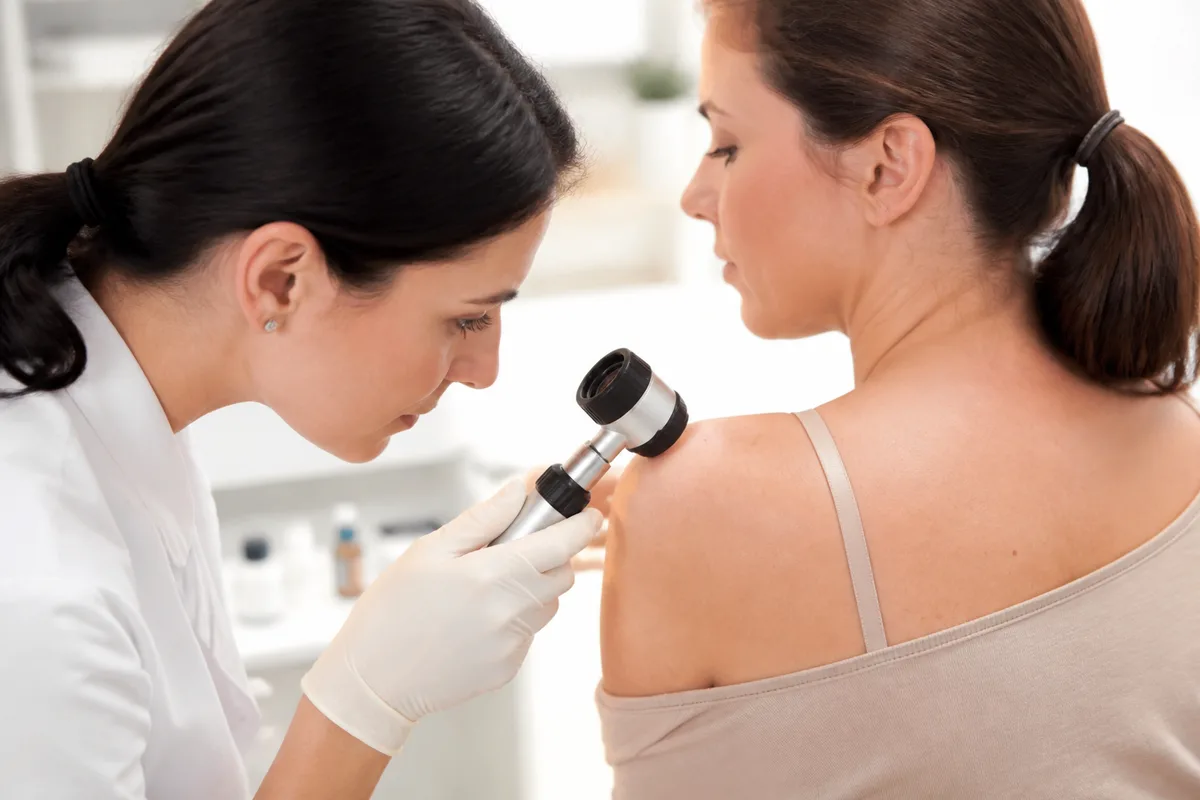
- Skin cancer screening — examination of moles and changing lesions, with biopsy when something needs a definitive answer.
- Warts, cysts, and benign growths — removal in the office.
- Hair and nail conditions — including fungal infections and unexplained hair loss.
In-office procedures
Biopsies, lesion removals, and cryotherapy are performed here, and specimens go out with clear tracking so results come back to the provider who saw you.
If a rash turns out to be allergic, or a foot lesion belongs with podiatry, the handoff happens inside the same practice.
When to have a mole checked
Most moles are harmless — the average adult has 20 to 40 of them. Book a skin cancer exam if a new mole appears or an existing one changes. The warning signs are the “ABCDE” characteristics:
- Asymmetry — a mole should be round and even.
- Border — edges should be regular and well defined.
- Color — brown or flesh-colored, not black, blue, or patchy.
- Diameter — no wider across than a pencil eraser.
- Evolution — a mole should not change shape or color.
Skin exams are performed by Dr. Gladstein, our dermatologist.
This content is for general information only and isn't medical advice. Talk with your doctor about your own situation. If you have a medical emergency, call 911.
